History of the
Property and the House
Ted, Ann,
David and Kimberly Schnormeier moved to Knox County in the summer of
1966. They acquired the house and three acres at 8542 Laymon Road,
directly across the road from what is to become the future Visitor
Center. Ann often remarked that she would not like to see homes
built in the field to the South and East of that home but that it
should remain open green space. She got her wish for Christmas 1986
when Ted surprised her with a present of that twelve-acre parcel.
Shortly thereafter, the eighty-acre parcel that is now the Gardens
was sold and sub-divided into 2 ½ acre lots and the first new home
was erected.
It was at
that time that it was decided to expand the area that we would like
to preserve and remain undeveloped. By the time this process was
completed in 1994 we owned a total of twelve separate parcels
including six residences and 125 acres. All of this was contiguous
property and was on Laymon Road bounded by Baker Road on the South
and Glen Road on the North. The acquisition purpose was to clean up
these properties, preserve the rural nature of the area and keep
them from being developed.
|

Photograph of home site at acquistion |
|
The clean
up process started with the acquisition of the properties and was
mostly completed by 1993. During this time, houses were moved,
remodeled, or burned down. Fields and fence lines were cleaned up of
multiflora rose, dead and fallen trees and miscellaneous collections
of debris. The fields were planted into hay fields. Over a mile of
horse fence was installed in 1989 and 1990. Three hundred
Acer rubrum
‘October Glory’ maple trees were planted over three successive
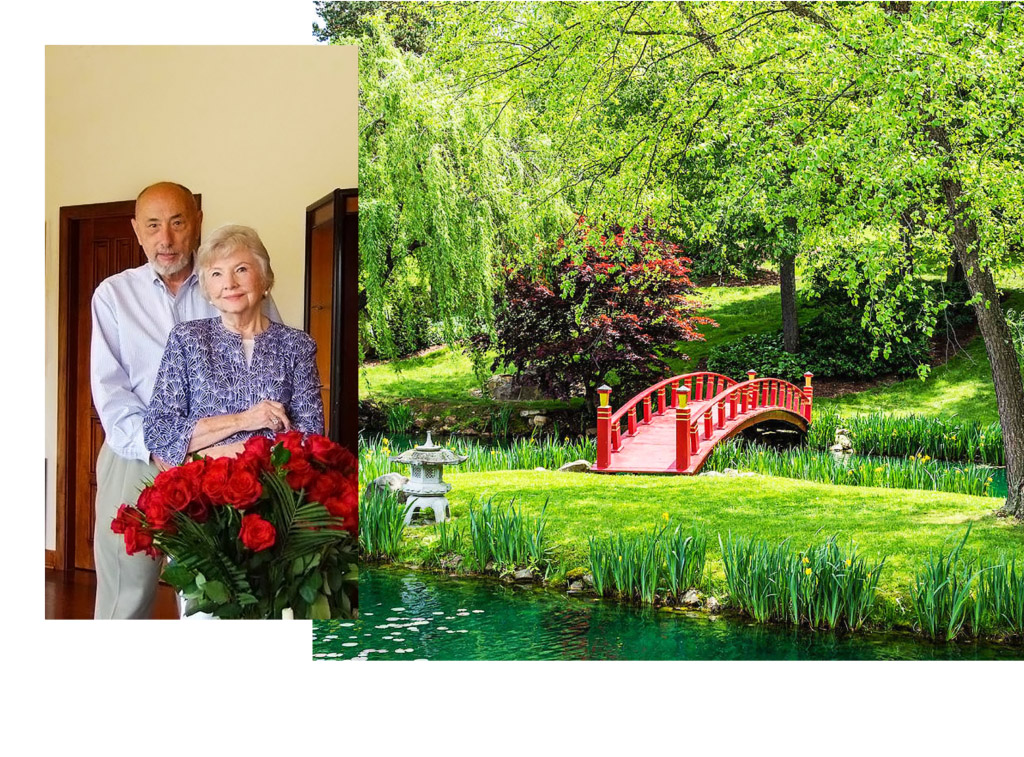
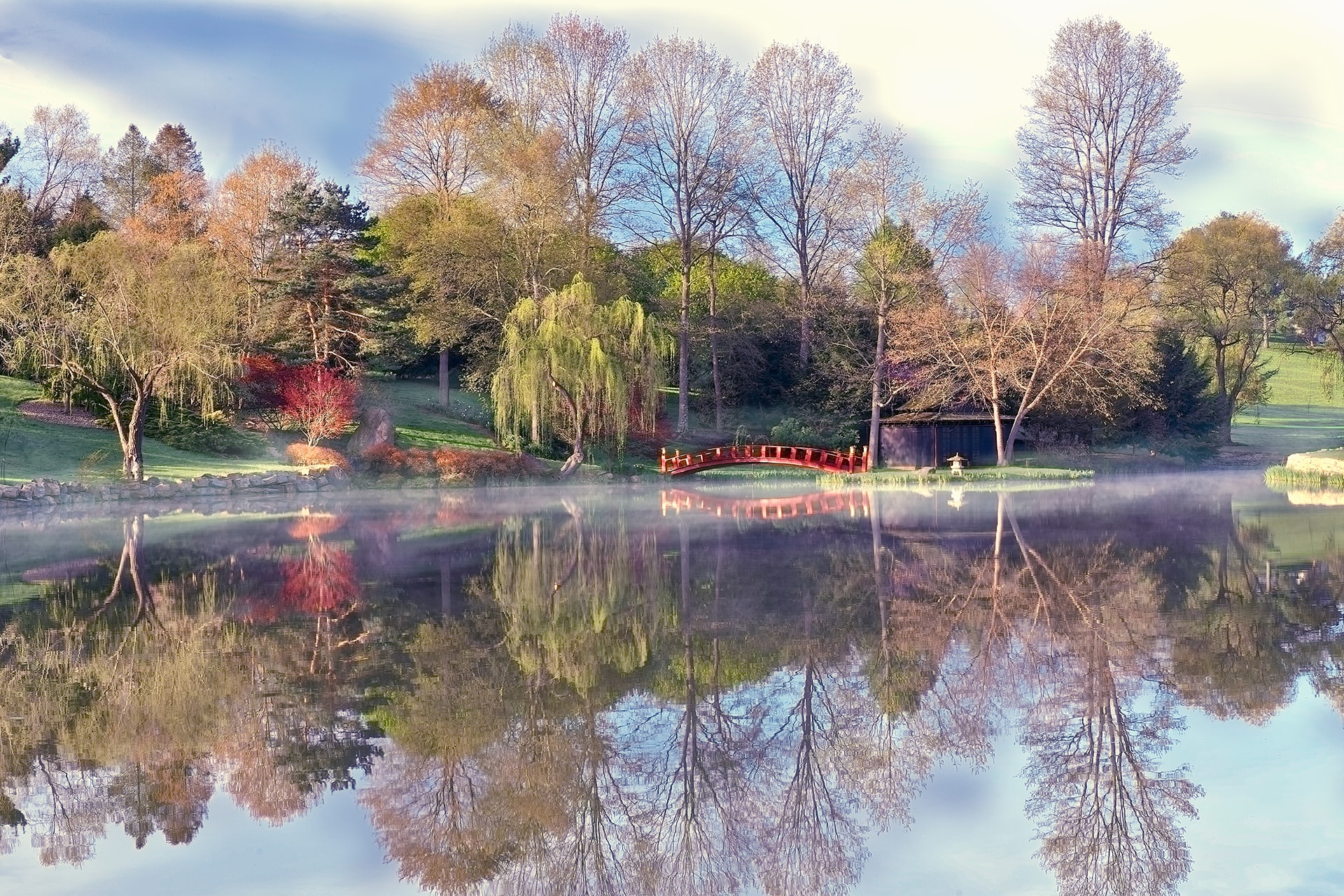
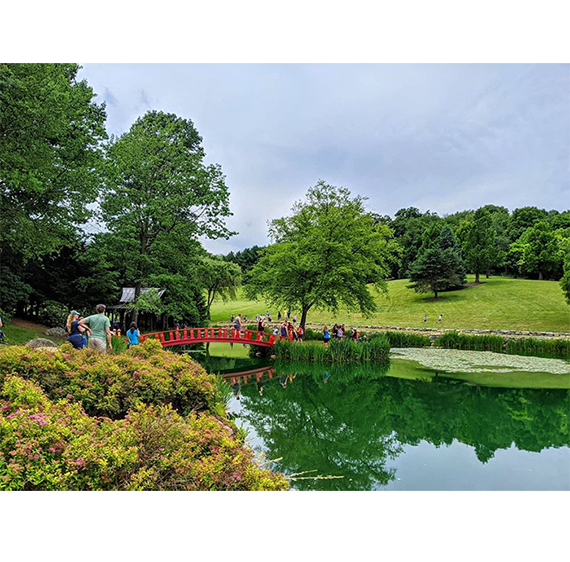
springs starting in 1989. Also, in 1989 the five-acre lake was built
and stocked and the dock house and red Chinese Bridge were built.
The
property was now starting to look like something and we felt it
needed to be named. We named it
San-Jule Arabian Farms.
This was
really a family joke, as we owned one Arabian mare and multiple
farms!
The
appearance of the properties continued to improve with the fence,
trees, lake, and structures all ‘settling in’ and looking like they
belonged. Ann started suggesting that a perfect site for a new home
had been created – although that had never been the intention – Ted
pretended to never hear the suggestion.
|

Ann and San-Jule - aka Julie |
|
In 1992
Ted finally relented and asked Ann to suggest the specific site and
draw a floor plan of what she had in mind. It was at this time that
Ted’s enthusiasm for the project grew and he drew all of the plans
over several weekends of that year. The determination was made to
proceed and construction commenced in April of 1993.
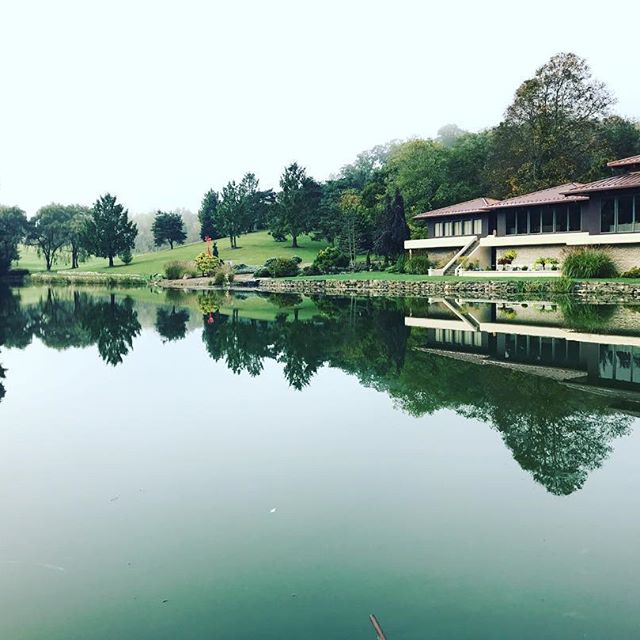
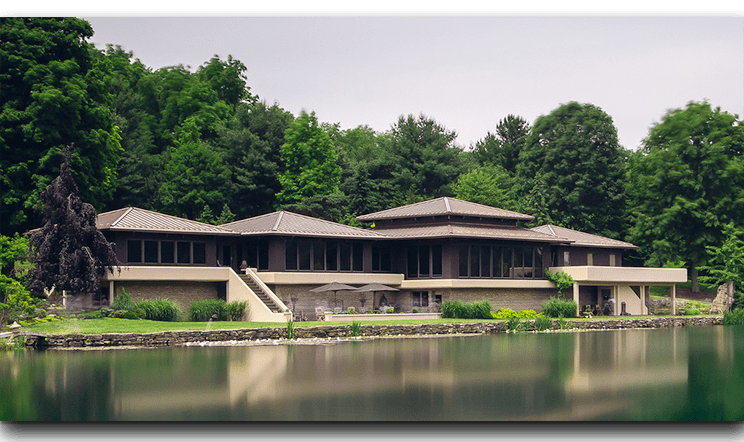
The site itself
suggested a long and low house that would be nestled into the
hillside on the West side of the lake. Both Ted and Ann, being Frank
Lloyd Wright enthusiasts as well as ‘Fallingwater’ fans, decided to
use that as their inspiration for the actual siting, exterior
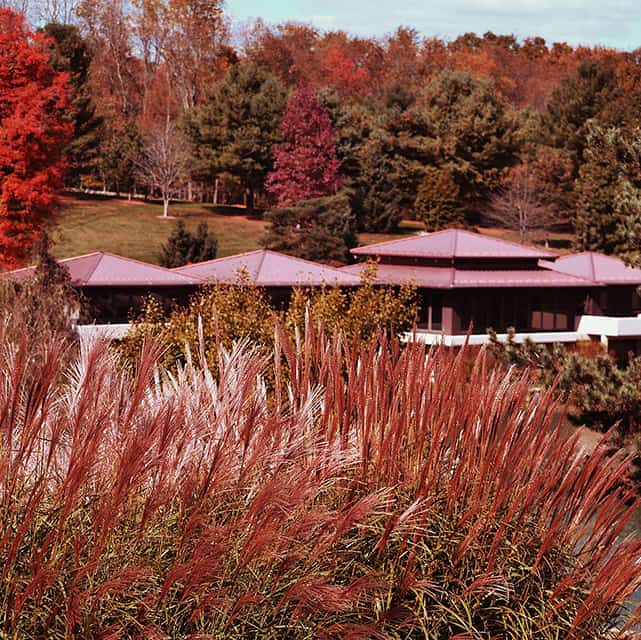
appearance and interior philosophies. The result is an exterior
appearance of Fallingwater ‘stretched out’ as opposed to
being ‘stacked up.’ The dominating copper roof structure is meant
to resemble a Japanese village. FLW exterior styling clues are the
roof with its large overhangs, massive amounts of glass (Ted was in
the window business after all), cantilevered decks, the shape and
color of the deck railings and the Wisconsin limestone and stucco
exterior finish. The rear of the house continues this influence with
the intimate Japanese Garden and the ‘rain chains’ used in lieu of
downspouts. The house is 156 feet long and comprises 4600 square
feet.
|

Home site after clean up and construction of main lake |
|
From the
moment one approaches the cast bronze front doors and enters the
foyer, the FLW influence continues. The use of excellent design and
high quality construction materials and décor combine to create a
structure that functions both as a dwelling and as a work of art.
The house was completed in April 1994 and Ted and Ann moved in on
the May Day weekend.
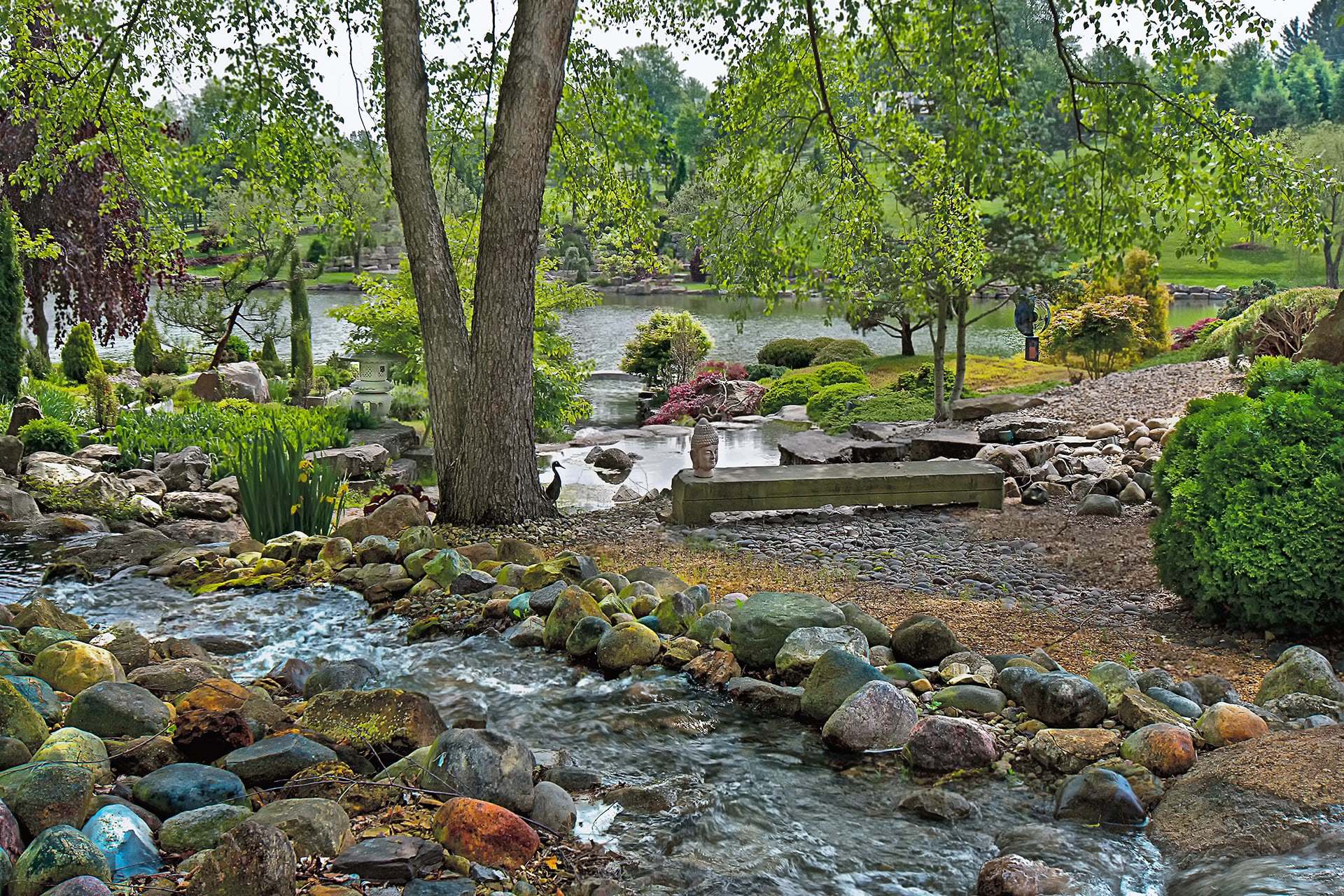
The only landscaping
intended to be part of the house project was the Japanese Garden and
the area immediately South of the house to the stream. Inspired by a
trip to China in 1995, ideas for an expanded garden project began to
grow. That then was the beginning of ‘The Gardens’ themselves – not
as a grand plan, but as an evolutionary process. That begins another
story – ‘The History of the Gardens’. |

1994 and house is complete |
|
The History of
the Gardens
After
recovering from building our new home and living in it for over a
year, it became evident that something was going to have to be done
to the fifty surrounding bare and treeless acres. But what? How?
Who? We possessed no previous knowledge or experience in landscaping
and had next to no knowledge of plants.
After some
inquiries, Van Wade of Wade and Gatton Nurseries in Bellville, Ohio
suggested R. J. Stovicek & Associates of Lorain, Ohio. Bob Stovicek
is an OSU landscape architect and horticulture graduate as well as
being a sculptor, waterfall builder and general contractor with a
lifetime of experience on large projects all over the country. His
delightful wife Jeannie and other members of their firm ably assist
him.
In 1996
our first meeting was held in the late spring and we discussed a
number of possibilities for the property. Soon after, we reviewed
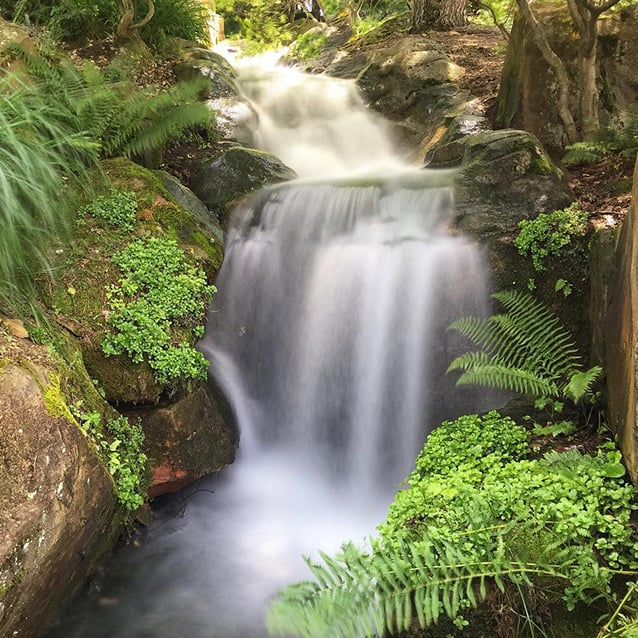
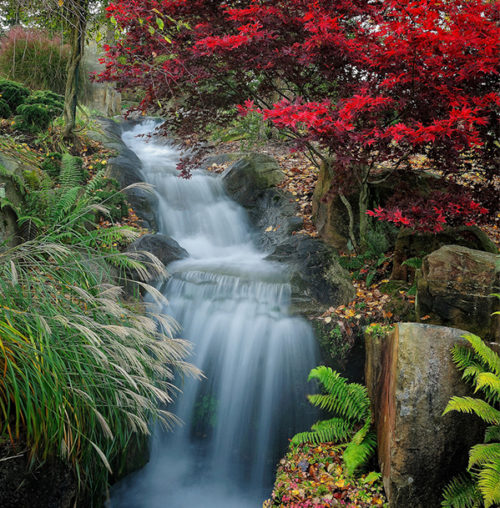
scale models and proposals for the Meadow Garden, the Waterfalls
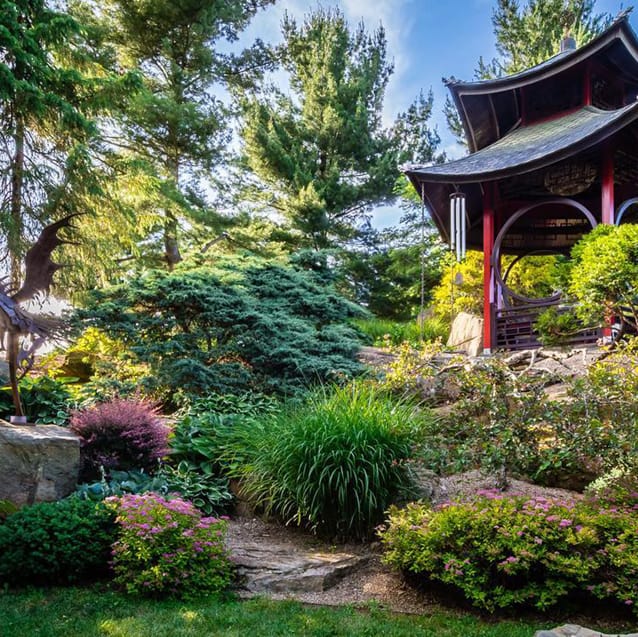
Garden and the Chinese Cup Garden & Pavilion. We were all
enthusiastic about the proposal and determined to proceed promptly
as it was the ideal time of year; it fit their schedule and our
desires. The proposal included design of the three areas, selection
and placement of the plantings (exclusive of all materials) for
$12,000. Little did we know at the time that before the project was
complete we would exceed that amount many times over. |


Models of large waterfalls and Chinese Cup Gardens |
|
The next
step was selecting the large rocks that would be needed to make the
project a reality. To that end, we spent a day with Jerry Parsons of
the Briar Hill Stone Company of Glenmont, Ohio. When we told him
what we were looking for we think he believed we were certifiably
crazy! (We probably were!) But, after patiently showing us several
possibilities we were eventually able to reach a meeting of the
minds. It was a eureka moment when he said “I know just what you
want, follow me!” We did, tearing through the countryside towards
their sandstone quarry number 26 in Stillwell, Ohio. He had indeed
understood what we were looking for and we now stood gazing at the
most enormous mountains of large to very large blocks of sandstone
of every color size and shape imaginable! The photograph shown below
will provide a hint of the difficult choices that had to be made.
Bob Stovicek is marking one of which he was particularly fond. The
next day we were like children in a candy store with no spending
limit, selecting and marking the rocks we wanted. Each piece was
like an individual piece of sculpture and we knew each one would
tell us exactly where and how it should be placed.
The
delivery process of 814 tons of rocks weighing between ten and
thirty tons each, started on July 6, l996. We would eventually end
up with more than twice this amount. The delivery, involving
unloading and transporting the rocks to designated areas, was more
stressful than can be communicated in writing. Between broken
chains, cables and equipment, to unload and move many massive rocks,
we were almost defeated. We employed the largest excavator we could
find in the state for more than a month as well as three different
cranes, bulldozers, backhoes, other excavators, tractor-trailers and
trucks but finally succeeded in locating them where they belonged.
Then, the necessary excavation and actual rock placement got
underway and the individual projects started to look like the vision
in our heads.
|

Sandstone Quarry Number 26 in Stillwell, Ohio |
|
Now was
the time to start thinking and learning about plants. To give the
project the immediate appearance of pseudo maturity we placed one
hundred thirty-foot White and Scots Pine trees in the general area
surrounding the large lake. Many trailer loads of trees, shrubs,
perennials and ground covers were placed and the repair and seeding
of the lawns was completed. It was now mid-November and we concluded
our activity for the year. The total amount accomplished in a
relatively short period of time was utterly astounding! In just five
months time the Waterfalls Garden, Chinese Cup Gardens and the
Meadow Gardens were basically complete - with water roaring over the
waterfalls and just waiting for Mother Nature to make her
contribution. The property was starting to be transformed and we
wearily headed south to our home on Sanibel Island, Florida for the
winter to restore our bodies as well as our souls!
1996 was
the first year we had any additional help on the property and that
was in the person of Dirk Parker. Dirk served principally as
groundskeeper and gardener as Ted spent nearly all of his time on
the construction projects. From then on, through 2002 all of the
grounds keeping duties as well as additional construction were
pretty much handled by Dirk and Ted. He is a most delightful and
diligent worker and friend, who has since moved on to make more
appropriate use of his degree in sociology.
Further
evolution continued with more plantings and refinement in 1997. The
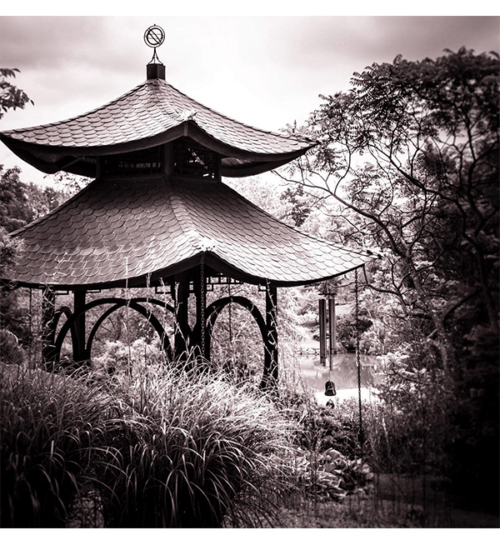
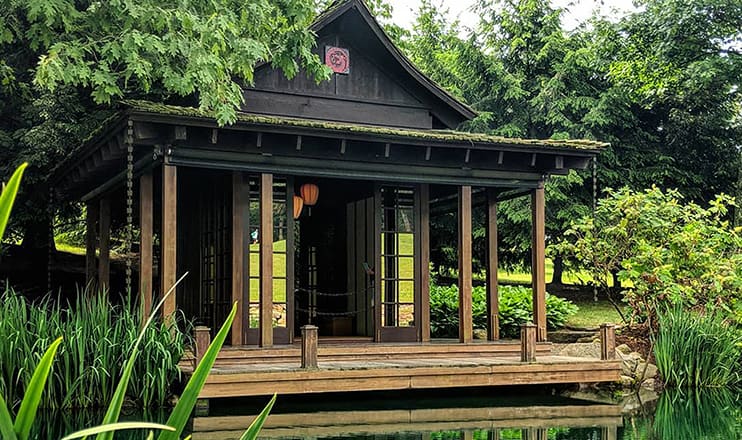
following year we constructed the Chinese Pavilion. The year 2000
saw the
construction of the Japanese Teahouse – but not
without incident. On the day we completed installing the twelve
doors we were struck with a mini-tornado at ten PM. More than a
dozen large, one hundred year old trees were destroyed. Some were on
the roof of the teahouse and through the doors. It took a crew of
five more than a month to clean up the mess and repair the damage.
|

Japanese Teahouse |
|
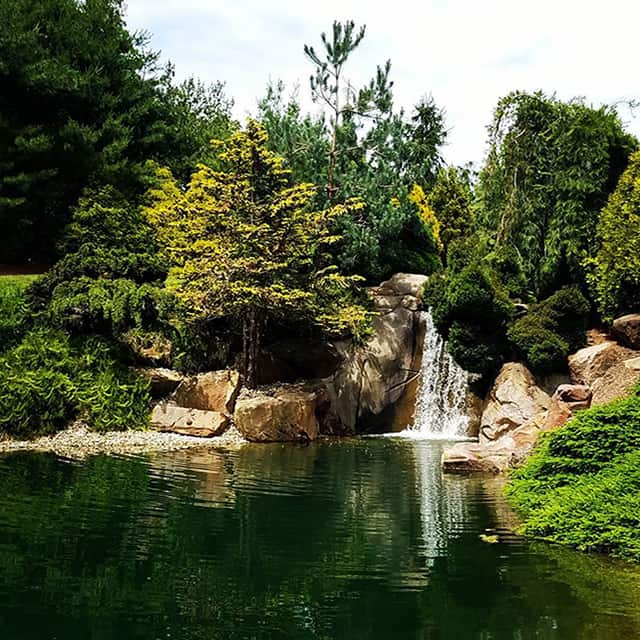
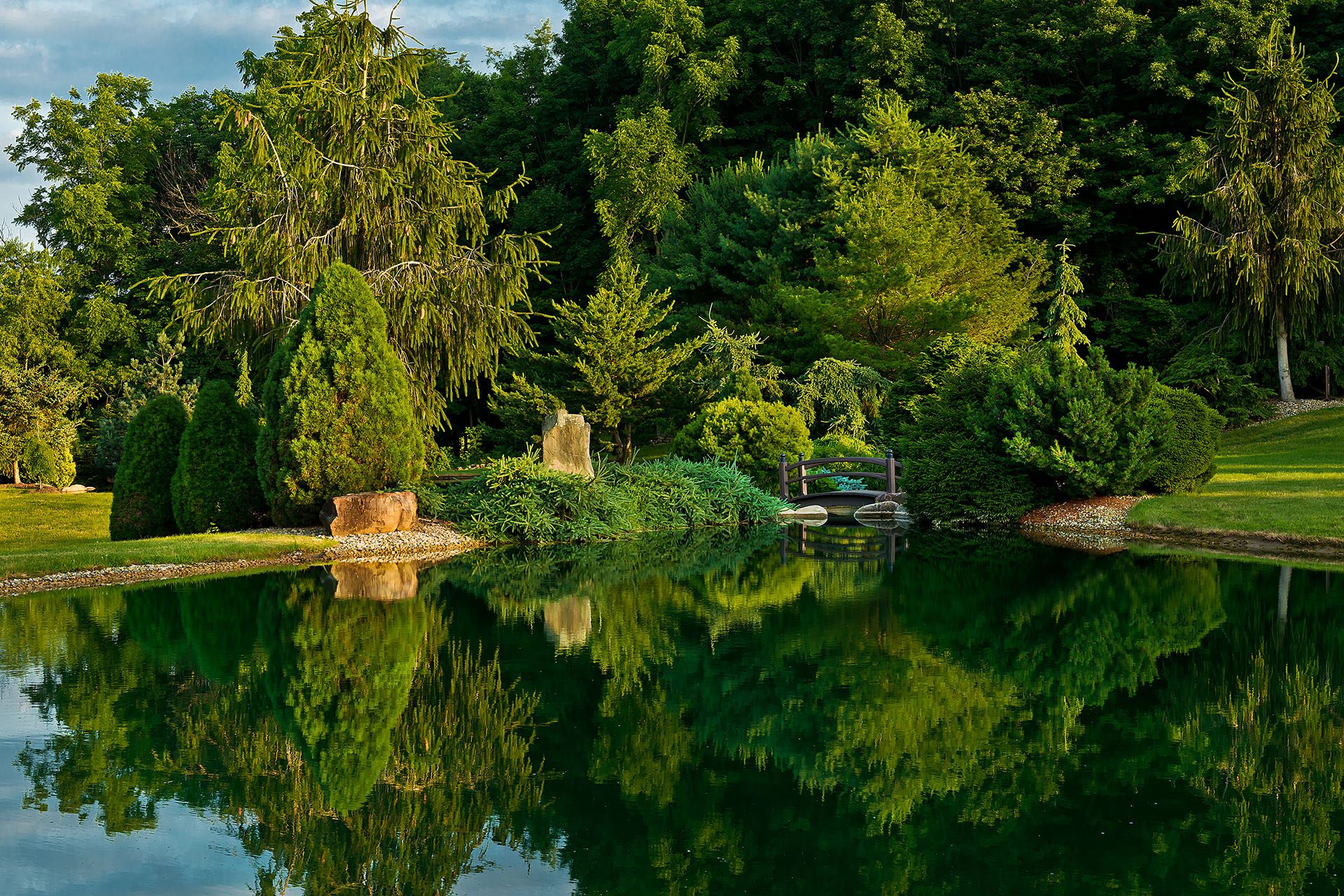
Also in
2000, the lakes, streams and waterfalls for the Serenity Garden were
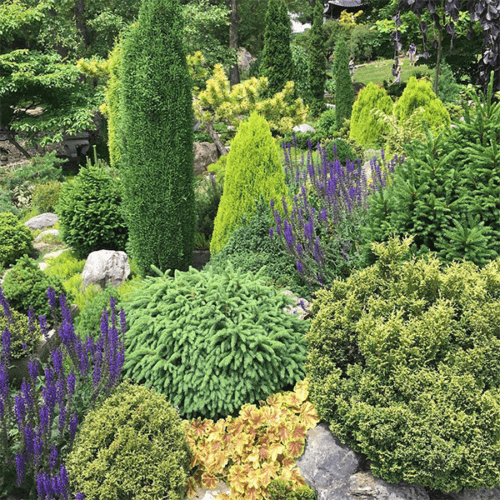
constructed and the Conifer Forest was planted. At this point, (even
though it might not sound like it) the construction and development
process was beginning to wind down and we were looking for other
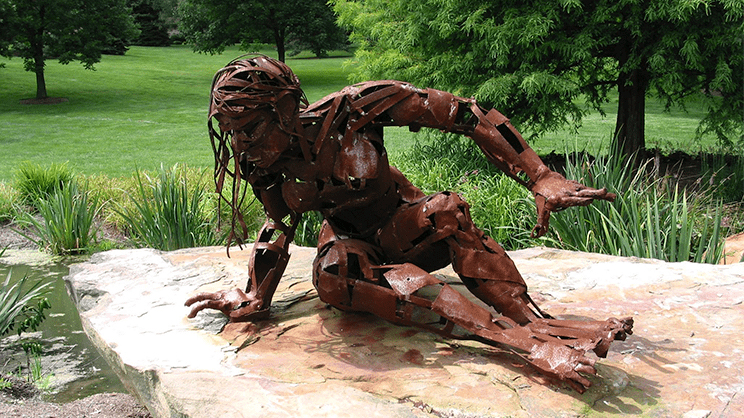
enhancements we might include. We determined that the addition of
sculpture would be an asset for our enjoyment as well as that of
others. We started with several pieces and anticipated opportunities
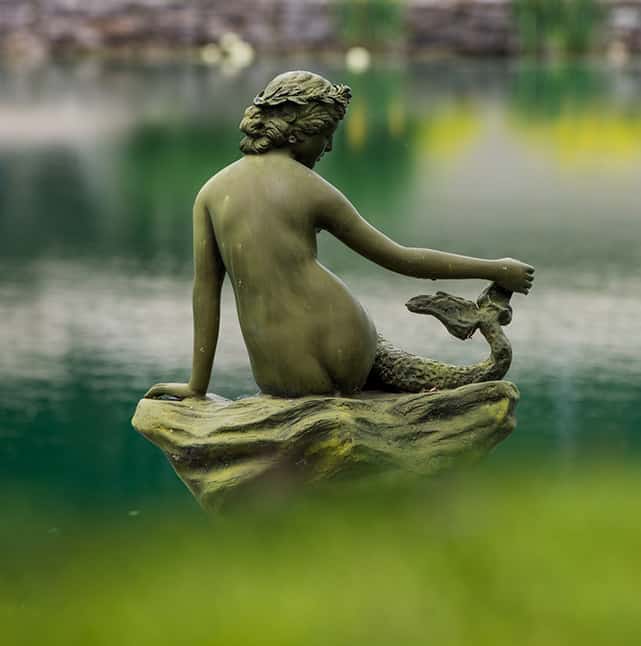
for more – but that is another story – Art in the Gardens.
2001 saw
the construction of the Japanese Garden House and the placement of
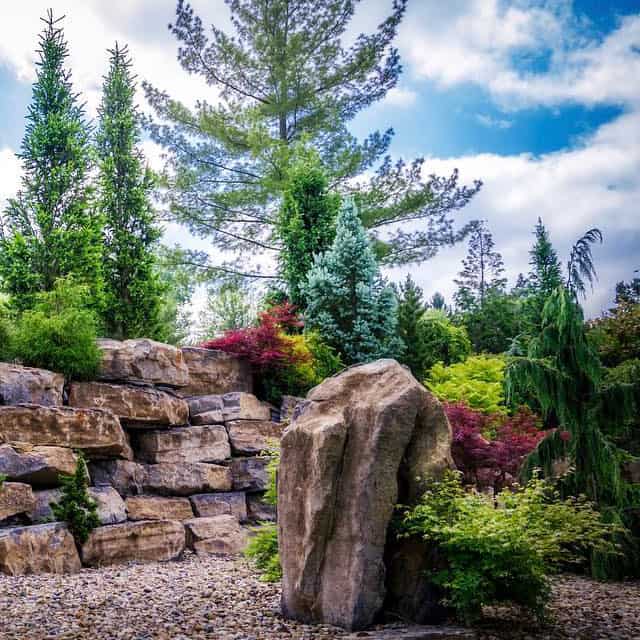
the rocks for the Stream forming the backbone for The Stream Garden.
Also, in November of this year the initial planting of rare conifers
commenced in the Serenity Garden – finally completing the vision for
this area. Kary and Gary Gee of Gee Nurseries of Stockbridge,
Michigan most ably assisted us in our selection of this stock. The
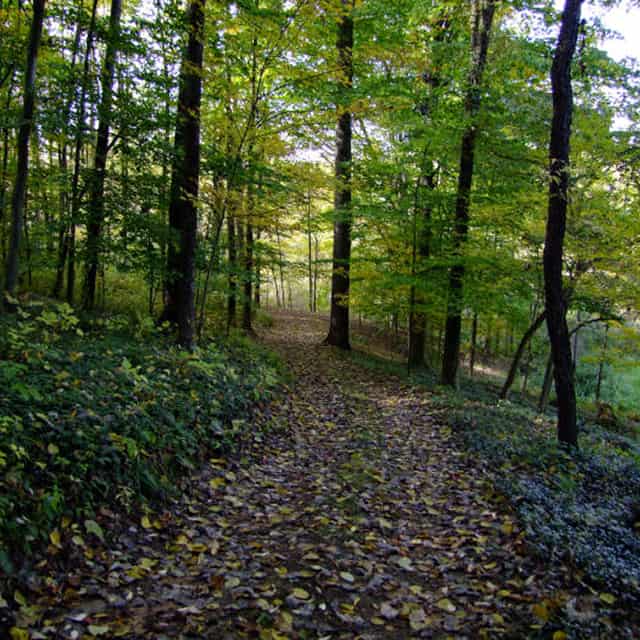
Winter of 2002 saw the start of The Woodland Garden with the initial
clearing of the one-half mile long walking trail.
The spring
of 2003 brought the planting of many trailer loads of plant
specimens in the Stream Garden completing that area. Also, two
pieces of sculpture were placed in 2003 - two others from the same
series having been placed in 2002.
|

Japanese Garden House |
|
It is now
in the winter of 2004 and much effort is going into cleaning up the
woods around the new walking trail in the Woodland Garden.
Throughout the development of The Gardens, there was much effort
expended on maintaining the property, as well as considerable
numbers of additional plantings all over the area. This is expected
to continue as the story of this garden as with any garden never has
an end. . . just another new beginning.
The
history of the development of The Gardens would be incomplete
without a description of a few sticky situations that we got
ourselves into. They are as
much for your
amusement as enlightenment - though as we were dealing with them
they were very serious and had potentially serious consequences. The
incidents /stories are only a very few of which might be told.
The
opportunity exists to weave three miserable situations into one
story - so here goes! A large well was drilled in the Serenity
Garden as the water source for the ponds, streams and waterfalls
located there. We told the well driller we needed a minimum of 500
gallons per minute. With the 8” well down to four hundred feet he
stated that it would produce between 4-500 gallons per minute as
required. To go any deeper would risk hitting salt water, natural
gas or oil. We stopped there, as water was what we needed. To get
this many gallons to the head of the well required a 50 horsepower
submersible pump – larger than any the pump manufacturer had ever
produced. To run this pump, massive amounts of power was brought
from across the road, under the road and driveways and around ponds.
This was an extremely costly process and required a substation large
enough to run a factory.
The lakes
were excavated and the pump was turned on. It produced a vast amount
of water for a few seconds, until it had pumped the well empty, and
then only a trickle! It was determined that the well actually
produced less than 100 gallons per minute and required replacement
of the 50 hp pump with a 10 hp pump. In the process of changing the
pump, the pump man needed some additional tools, which he called his
father to bring out. Unfortunately, he neglected to watch where he
was going, drove directly into one of the lakes, and almost
completely submerged his car. He managed to safely escape with the
able and courageous help of Dirk. The evenings’ excitement left us
all drained.
|

Submerged Car |
|
The pump
was replaced and was now working as expected. However, the eighty
gallons per minute over the waterfalls and down the stream was most
disappointing. To correct this situation an electric line was run
from the panel up in the Serenity Garden, down to the large lake, a
well pit and pump was installed and a 6” water line was run from the
large lake to pond number four to provide the necessary volume over
the waterfalls to provide a satisfying effect.
When the
Conifer Forest was planted we also placed some trees in the Stream
Garden. Unfortunately, we lost track of the location of the 480v
electric line and water line and much to our shock, the 3’ auger
went right through them – fortunately without killing anyone! It was
now just prior to Thanksgiving and I declared that we were done for
the year - as we had already done enough damage for one year! We
escaped to Florida.
Upon
returning in the spring we found all five of the lakes nearly empty.
This confirmed our suspicion that they all leaked despite excellent
clay soil conditions. It was now readily apparent that the
excavation contractor had done an inadequate job of compacting the
soil. Now what? We contacted a ‘pond sealing’ company that sprays a
solution of Bentonite and polymers onto the lake surface. It then
settles and seals the lakes. It did nothing, except to drain our
wallet.
Uncertain
about how to proceed, we did nothing the next year. By running the
pump in the well continuously we kept the water pristine and clear
enabling us to see a small frog sitting on the bottom of an 8’ deep
pond. The disadvantage was the expense of running the pump
twenty-four hours a day.
|
 |
|
In August
of 2002 we decided to bite the bullet and drained the five ponds and
hauled away about 50 dump truck loads of muck. We then imported 38
trailer loads of a sealing clay called Tionesta from southern Ohio
and placed an 8” layer in all of the ponds. We started to again fill
the ponds producing what was cloudy, gray colored and disappointing
water quality. There was no clarity for even 1”! Plus, after a very
short time it also became apparent that the lakes were still
leaking, maybe at an even greater rate than before. This was not a
good situation!
Because we
didn’t know what to do, we just ignored it. However, by mid-summer
it made itself known to us by leaking this very cloudy water into
the aquifer and coming out of the faucets in our house. It ruined
our well, pump, and many of the faucets. We put in a new pump and
the most extreme filtration system available. It did nothing. The
problem remains ongoing - sometimes the water is clear and sometimes
cloudy and the ponds still continue to leak!
We are
currently funding a study at the Geology Department at the
University of Cincinnati and working with a hydrological firm
searching for a solution. What does all of this cost and what was
the cost to date for this situation? You don’t want to know and
neither do we!
And herein
lies the joy of gardening - many triumphs, many failures. But, it is
a creative, challenging and completely engaging process. We find the
result pleases the eye, feeds the soul and brings joy in the
sharing.
|

Chinese Cup Garden and Pavilion |
|
|
|
 |
|
|
 |
|
|
 |
|
|
 |
|
|
 |
|
|
 |
|
|
 |
|
|
 |
|
|
 |
|
|
 |
|
|
 |
|
|
 |
|
|
 |
|
|
 |
|
|
 |
|
|
 |
|
|
 |
|
|
 |
|
|
 |
|
|
 |
|
|
 |
|
|
 |
|
|
 |
|
|
 |
|
|
 |
|
|
 |
|
|
 |
|
|
 |
|
|
 |
|
|
 |
|
|
 |
|
|
 |
|
|
 |
|
|
 |
|
|
 |
|
|
 |
|
|
 |
|
|
 |
|
|
 |
|
|
 |
|
|
 |
|
|
 |
|
|
 |
|
|
 |
|
|
 |
|
|
 |
|
|
 |
|
|
 |
|
|
 |
|
|
|
|
|